Why Great PMs Use the Trust Equation
APR 28 2025 :: PHIL GERITY
Every product team I’ve led has encountered some form of this challenge along the way: decent specs, smart people, yet progress stalls in spec reviews, derails in ship rooms, or ratholes in exec reviews. I’ve spent thousands of hours coaching PMs and while there are all sorts of reasons these things happen—it often boils down to one word, trust (or the lack of it). So let’s treat trust like we treat latency or reliability: measure it, tune it, and ship better results.
Enter the Trust Equation from The Trusted Advisor (Maister, Green, and Galford, 2001):
Trustworthiness = (Credibility + Reliability + Intimacy) ÷ Self‑Orientation
Raise the first three, suppress the last, and watch alignment speed up.
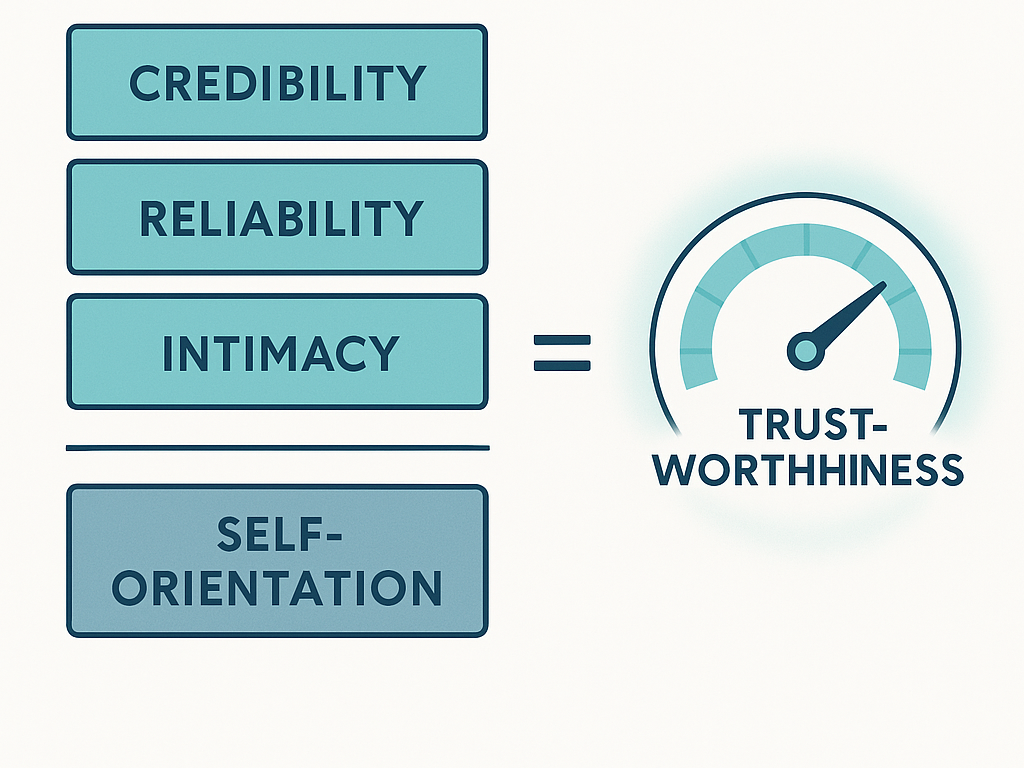
Decoding the Variables
Credibility
Plain-English Take: Do we believe what you say? Quick Check: Can I trace this claim to data, a customer quote, or real experience?
Reliability
Plain-English Take: Do you do what you promise? Quick Check: When you pick a date, do we set our watches or hedge?
Intimacy
Plain-English Take: Is it safe to be candid with you? Quick Check: Will I regret admitting a risk in front of this person?
Self-Orientation
Plain-English Take: Whose win are you chasing? Quick Check: Count the I’s versus we’s in your last status mail.
Keep the numerators high; keep the denominator low. Simple math, hard practice.
Where Trust Rises—or Dies—Every Sprint
1. Spec Reviews → From idea to commitment
Spec reviews are credibility auditions. Walk in with telemetry instead of intuition and you open with a surplus of trust. Close the loop by finishing the meeting with an owner, date, and next artifact—that’s reliability in 30 seconds. Before adjournment ask, “What’s your biggest fear with this design?” You’ve just bought intimacy. Finally, frame success as a customer delta (“10 % fewer abandon‑to‑desktop events”), not résumé glitter. Self‑orientation stays low, numerator stays high.
2. Ship Rooms → Game‑time reliability
Ship rooms should feel almost boring: live dashboards replace screenshots, task and bug burn‑down trends speak louder than opinions, and success criteria put users ahead of optics. When trust is high, engineers flag scary unknowns because past blameless post‑mortems proved it’s safe. When it’s low, you spend the entire meeting litigating whether a metric is real.
3. Executive Reviews → Trust on the big stage
Execs decide in minutes whether to bet bigger on you. Open with a one‑page narrative—facts first, flair later. Lead your deck with last quarter’s Promises → Outcome table to demonstrate reliability. Name the dissent you’ve already heard (“Design is worried about > 250 ms latency”) to show intimacy with stakeholder concerns. And keep the pronouns user‑centric: more customers and we, fewer I. High numerator, low denominator, funding secured.
Everyday Influence (aka Political Capital You Can Measure)
- Borrow credibility: line up respected peers before the meeting.
- Bank reliability: never miss the small deadline everyone else forgets.
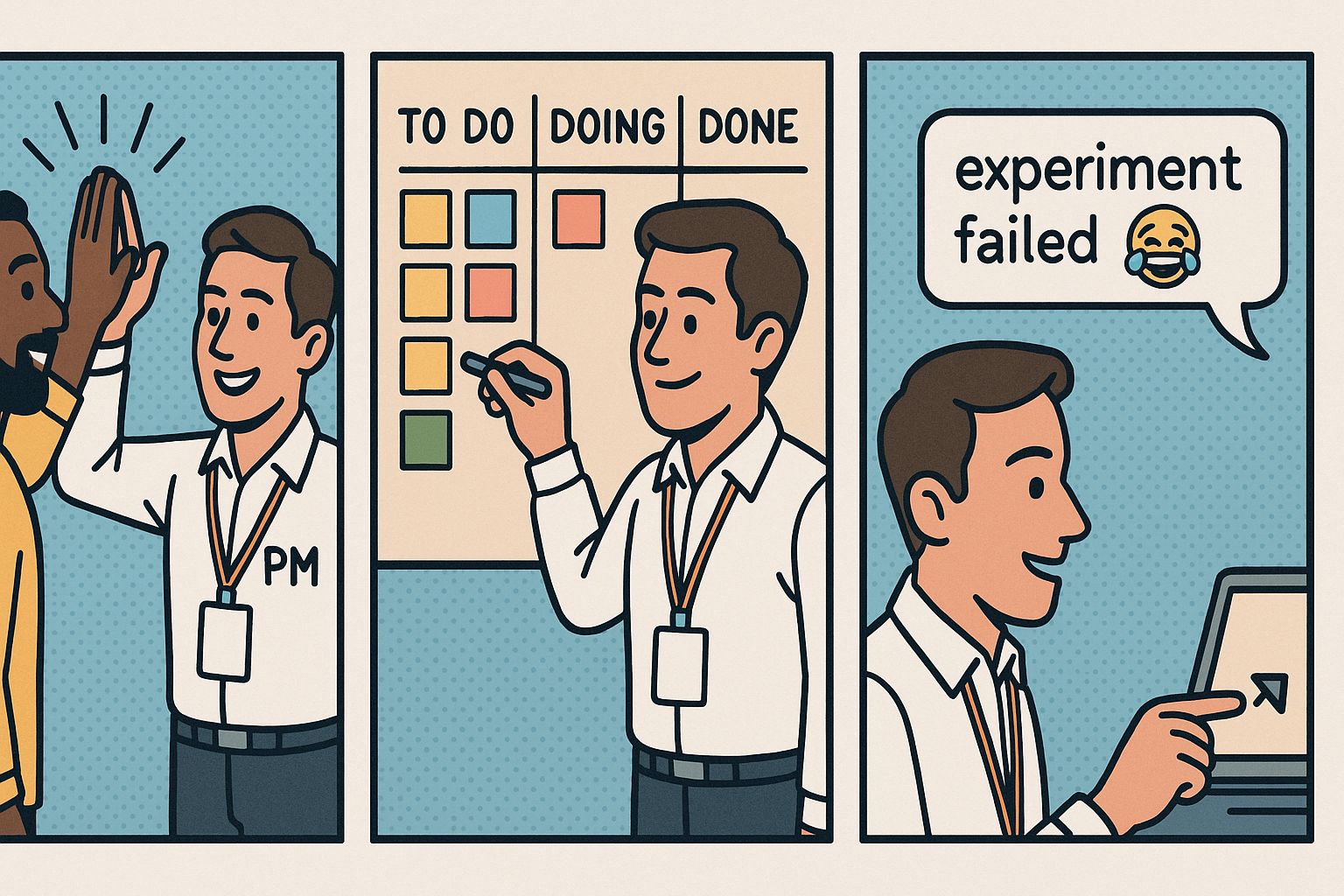
- Show intimacy: post a failed experiment in Teams/Slack for your team.
- Kill self‑orientation: pitch every request in terms of user value, not PM glory.
Techniques that ignore these levers feel “political.” Techniques that respect them feel like leadership.
Start Small and Practice It
- Score yourself 1‑5 on each lever before your next spec review.
- Pick the weakest numerator—or the highest denominator.
- Design a two‑week experiment (public action‑item tracker, daily burn‑down, etc.).
- Share your results with your team.
Shout‑out to Angelo Gacad-Sioson for introducing me to the Trust Equation. Let me know which lever you’ll tweak first in the comments.
Originally published on Product Byte (Substack)